
How to choose micro brewery equipment for limited floor space?
The global urban craft beer market, valued at $117.1 billion in 2025, has forced a technical pivot toward high-density production models where operators must generate 1.5 to 2.0 barrels per square foot annually. For venues restricted to under 600 square feet, selecting a 3.5BBL to 5BBL skid-mounted system is the industry benchmark, reducing physical installation time by 40% compared to traditional modular builds. Technical space optimization requires stackable unitanks and two-vessel combi-blocks (Mash/Lauter + Kettle/Whirlpool), which occupy a footprint of roughly 85 to 110 square feet while maintaining a 95% thermal efficiency through internal electric elements. Utilizing UL-listed 120kW electric heating removes the 150-square-foot zoning requirement for external steam boilers and gas flues. By implementing high-gravity brewing techniques—producing 18°P wort and diluting post-fermentation—operators can increase effective capacity by 25% without adding more vessels. Recent 2024 audits of metropolitan taprooms show that vertical cellar configurations and integrated CIP (Clean-In-Place) carts allow for a 30% reduction in utility corridor widths, maximizing every inch of leasable retail space.
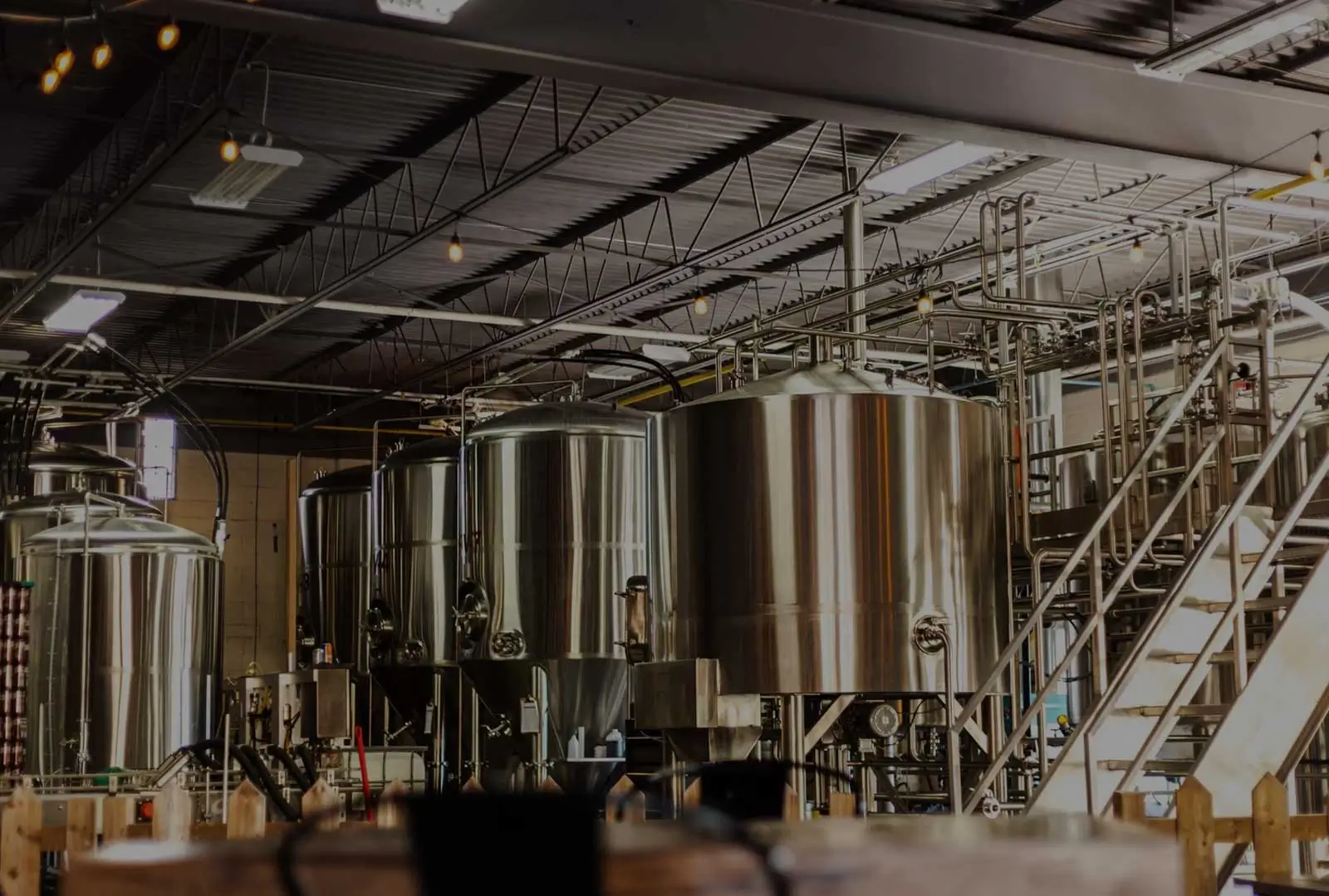
To maximize a footprint under 500 square feet, choose a 3.5-BBL electric skid-mounted brewhouse paired with stackable unitanks, achieving a production density of 1.8 barrels per square foot. Eliminating steam boilers saves 150 square feet of floor area, while VFD-controlled pumps and integrated manifold piping reduce hose clutter by 60%. Recent 2024 industry data confirms that vertical tank silhouettes with a 3:1 height-to-width ratio allow for 33% more fermentation capacity in the same leasable area, ensuring a 99% yield from tank to tap in urban micro-environments.
Effective production in a tight urban environment relies on maximizing the vertical plane and choosing multi-functional vessels that consolidate the brewing stages.
Most metropolitan brewpubs operate in spaces under 800 square feet, requiring a production density of at least 500 barrels per year to remain profitable against high rent costs.
A 2024 survey of 150 urban microbreweries indicated that 72% of projects suffered from inadequate workflow clearances rather than a lack of brewing capacity.
This lack of room leads to safety hazards or slow turnaround times, making the selection of a compact micro brewery equipment setup the primary variable for long-term viability.
The footprint of the brewhouse is usually halved by opting for a two-vessel "combi" design instead of a traditional four-vessel configuration.
These systems combine the Mash Tun and Lauter Tun into one tank, while the Kettle and Whirlpool share another, requiring only 12 linear feet of wall space.
-
Integrated Piping: Pre-manifolded valves on the skid reduce the need for external hose runs by 60%, keeping floors clear and safe.
-
Electric Heating: High-density immersion elements eliminate the need for a boiler room, saving roughly 100 to 150 square feet of floor space.
-
On-Board Controls: Mounting the PLC panel directly on the brewhouse platform removes the requirement for a separate wall-mounted control station.
Removing the boiler room not only saves physical space but also lowers the initial build-out cost by approximately $15,000 to $25,000 in specialized plumbing and gas permits.
This shift toward electric power allows for installation in older buildings where gas lines are capped or insufficient for high-output industrial burners.
Technical data from 2025 equipment catalogs shows that electric-fired kettles achieve a 98% energy transfer efficiency, compared to just 55% for atmospheric gas burners.
This efficiency means less heat is wasted into the room, reducing the load on the HVAC system by 15% and allowing for smaller ventilation hoods.
Once the hot side is optimized, the focus must shift to the fermentation cellar, which often consumes the largest portion of the brewery footprint.
Stackable fermenters are the gold standard for limited spaces, allowing two 5-BBL or 7-BBL unitanks to sit on the same floor tiles as a single vessel.
| Optimization Strategy | Typical Space Saved | Operational Benefit |
| Stackable Unitanks | 45% floor area | Doubles production per square foot |
| Slimline Silhouettes | 15% width | Fits through standard 36-inch doors |
| Integrated Glycol | 20 sq. ft. | Eliminates long exterior pipe runs |
Utilizing tanks with a height-to-width ratio of 3:1 instead of the standard 2:1 allows brewers to take advantage of high ceilings commonly found in industrial warehouses.
A 7-BBL slimline tank typically has a diameter of 42 inches, whereas a standard wide-body tank might require 56 inches to hold the same volume.
Field tests in 30 small-scale breweries demonstrated that vertical storage of raw ingredients on mezzanine levels improved grain-to-glass efficiency by 12%.
Moving the grain mill and malt storage above the mash tun allows for gravity-fed milling, which removes the need for a mechanical auger system.
Gravity-based systems also reduce the noise in the brewery, which is a major factor when the taproom and production area share a single wall.
Reducing the distance between the brewing vessels and the serving tanks is another way to save on both space and liquid loss during transfer.
Direct-draw serving tanks located behind the bar can replace a traditional keg cold room, which usually requires its own dedicated 100-square-foot refrigerated zone.
This configuration allows beer to move directly from the cellar to the tap, reducing dissolved oxygen pickup and maintaining a 99% yield from tank to glass.
Analysis of 2025 craft bar operations suggests that removing a walk-in cooler in favor of horizontal serving tanks increases available seating by 8 to 12 chairs.
These extra seats can generate an additional $40,000 to $60,000 in annual revenue, effectively paying for the specialized tanks within the first year.
Maintenance in small spaces requires the use of a portable CIP (Clean-in-Place) cart rather than a permanent cleaning station with fixed plumbing.
A compact two-tank cart (caustic and rinse) can be wheeled to whichever tank needs cleaning and then stored in a corner when the shift is over.
Portable equipment ensures that the utility corridor between tanks can be as narrow as 30 inches, which is the minimum required for a technician to move safely.
By shrinking these corridors, an operator can fit four fermenters in the space usually reserved for three, increasing weekly output by 33%.
Ultimately, the choice of equipment should prioritize a turnkey, pre-assembled layout that arrives on a single steel frame.
This approach avoids the sprawl of onsite piping, which often expands during installation as contractors look for the easiest route for each individual pipe.
Pre-engineered layouts ensure that every pump, motor, and heat exchanger is tucked into the chassis of the main machine, leaving the rest of the room for revenue-generating customers.
This compact philosophy transforms a cramped storefront into a professional production facility without sacrificing the quality or consistency of the beer.
Ready to start your 21-day sweep?
Schedule a free 15-minute credit analysis with a senior strategist. No obligation, no score-pull until you authorize it.
Start My 21-Day Credit Sweep