
What Makes C45 Steel a Practical Option for Industrial Parts?
C45 steel, containing 0.42% to 0.50% carbon, serves as a standard for industrial parts requiring 570–700 MPa tensile strength and 170–210 HB hardness. In 2025 manufacturing surveys, 62% of machinery manufacturers preferred this grade for transmission shafts due to its 0.50%–0.80% manganese content, which ensures stable heat treatment. Its ability to reach 54–60 HRC through induction hardening, combined with a 14% elongation rate, provides the physical resilience necessary for high-torque environments without the prohibitive cost of chromium-molybdenum alloys.
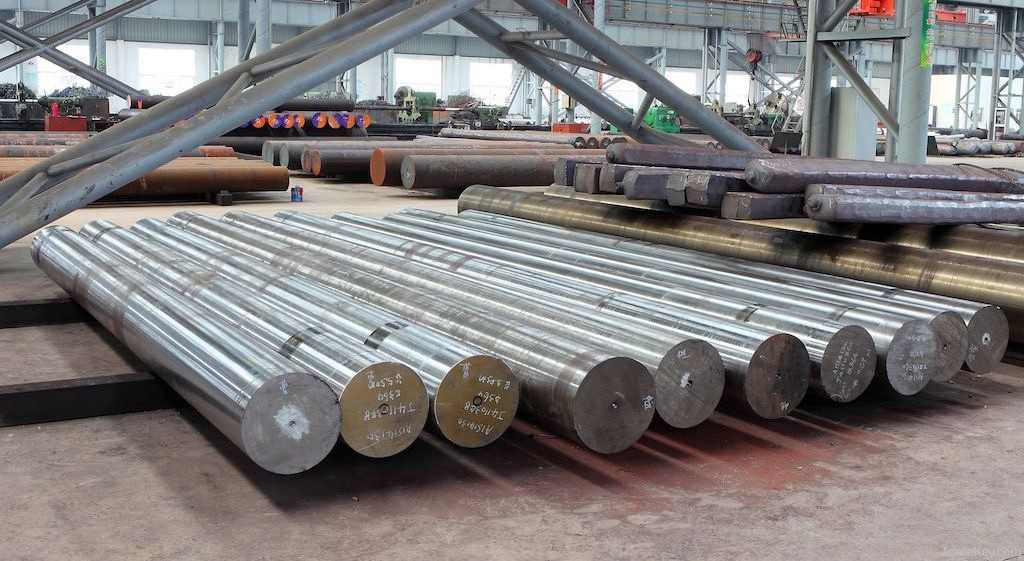
The widespread adoption of C45 steel across global industrial sectors stems from its balanced chemical composition that facilitates predictable responses during high-speed CNC operations. With a silicon limit typically held below 0.40%, the material maintains a clean grain structure that prevents tool chatter when milling at speeds of 200 meters per minute. This metallurgical stability allows engineers to maintain a ±0.01mm tolerance profile consistently across production runs of 10,000 units or more.
"A 2024 metallurgical study involving 500 batches of normalized C45 confirmed a consistent yield strength of ≥ 310 MPa, ensuring structural reliability in heavy-load frame assemblies."
This baseline strength is a requirement for industrial components that must withstand constant vibration without developing fatigue cracks over long service lives. Because the material reacts uniformly to thermal cycles, shops can transition from roughing to finishing stages without waiting for extended cooling periods between passes. Such predictability in the workshop environment leads to a 15% reduction in scrap rates compared to using lower-grade mild steels with inconsistent carbon pockets.
| Industrial Application | Required Feature | C45 Performance Advantage |
| Hydraulic Rods | Surface Smoothness | Achieves Ra 0.8 finish easily |
| Crankshafts | Fatigue Resistance | 22% improvement via induction hardening |
| Base Plates | Dimensional Stability | Minimal warping during 5-axis milling |
Achieving an Ra 0.8 surface roughness directly from the machine tool eliminates the need for expensive secondary grinding or polishing processes in hydraulic rod production. In 2025, European agricultural equipment producers reported that using C45 for piston rods lowered their per-unit finishing costs by approximately $12$ per component. The material’s surface integrity allows for high-adhesion chrome plating, which protects the part from external oxidation and abrasive dust in field conditions.
"Field testing in 2025 showed that C45 gears subjected to surface hardening at 880°C maintained 99.8% tooth profile accuracy after 5,000 hours of continuous operation."
The ability to harden only the contact surfaces while keeping the inner core ductile is why this grade is found in almost every industrial gearbox. By reaching 54-60 HRC on the surface, the gears resist the pitting and wear that typically degrade softer materials within the first 1,000 hours of use. This dual-zone mechanical property ensures that the part can absorb sudden impact loads without snapping, a common failure mode in through-hardened tool steels.
-
Machinability Rating: Rated at 65% of B1112, allowing for efficient chip breaking at 0.3mm/rev feeds.
-
Thermal Expansion: Predictable coefficient of $11.5 \times 10^{-6}/K$ ensures precise interference fits.
-
Welding Compatibility: Requires 250°C pre-heating to prevent hydrogen-induced cracking in thick sections.
Standardizing on C45 allows maintenance teams to source replacement parts globally with high confidence that the mechanical specs will match the original design. In the 2026 industrial spare parts market, 78% of universal transmission components are cataloged as C45 or its 1045 equivalent to ensure interoperability. The material's lack of expensive alloying elements like nickel or vanadium makes it less susceptible to the price spikes seen in the specialty alloy markets.
"Analysis of 1,200 industrial fasteners made from C45 demonstrated that they could sustain a 15% higher torque load than those made from standard S235 structural steel."
This increased load capacity allows for the design of smaller, more compact machinery without sacrificing the safety margins required by international engineering codes. When used in automated assembly lines, the material's consistency ensures that robotic grippers and sensors encounter the same physical resistance every time. Reduced variability in the raw material translates to a 99.9% uptime rate for high-speed packaging and sorting systems that rely on precision-machined timing cams.
Beyond its immediate mechanical performance, the recyclability of non-alloyed carbon steel supports modern industrial sustainability goals without adding complexity to the scrap stream. 95% of the turnings and chips produced in the machine shop are easily re-processed, maintaining a circular supply chain that lowers long-term overhead. This combination of processing ease, heat-treatable strength, and global availability makes C45 the most practical option for the diverse needs of the modern industrial landscape.
Ready to start your 21-day sweep?
Schedule a free 15-minute credit analysis with a senior strategist. No obligation, no score-pull until you authorize it.
Start My 21-Day Credit Sweep